Pages

Showing posts with label 10Sci. Show all posts

Tuesday, 29 October 2019

Volcanoes

I will be studying a volcano.

I chose Mount Fuji in Honshu, Japan. It's an active composite volcano, meaning it's a cone-shaped volcano with sills and pikes branching from the main conduit. Some of the rocks found include andesite and basalt.
Image result for composite volcano

I didn't do the experiment involved in this research, however, many groups chose to use a chemical reaction known as elephant's toothpaste - a reaction involving hydrogen peroxide and potassium (most people use potassium iodide, but we used potassium permanganate) - to erupt the model volcanoes they had built. Most of the volcanoes built were cinder cones, similar to composites but without the sills and pikes. One group tried to use the coke and mentos reaction (a physical reaction caused by mentos creating nucleation sites for the bubbles of carbon), but the coke turned flat before the experiment could take place.

Friday, 10 May 2019

Chemistry: Cobalt

If I were a metal element I’d like to be Cobalt and my symbol is Co.
My atomic number is 27 which means I have 27 protons in my nucleus and 27 electrons around my nucleus.
At room temperature (20 °C) I will be a solid

My melting point (the temperature when I turn from solid to liquid) is 1495 °C.
My boiling point (the temperature when I change from liquid to gas) is 2927 °C
I was first discovered by Swedish chemist Georg Brandit in 1735, in Sweden.
I am found in nature as a metal.
My uses to humans are:
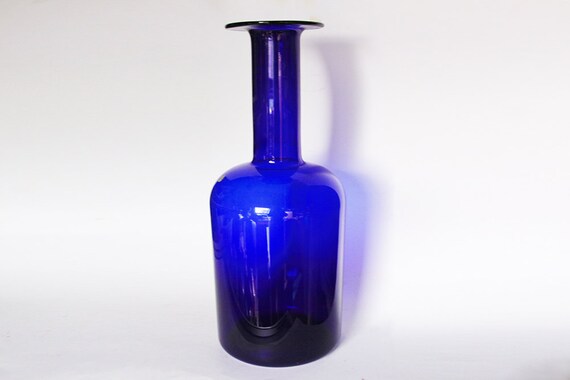
  • Colouring things such as glass and china, blue.
  • Helping make Alnico, an alloy used in jet engines and gas turbine engines.
  • Use in magnets and stainless steel.
  • Being part of vitamin B12.

Some interesting things about me are:
  • Despite being blue, my chloride counterpart (Cobalt Chloride - CoCl2) is actually pink.
  • When put in Sodium Hydroxide, CoCl2 starts as blue and floats, before turning pink and sinking.
  • Even though I'm in a vitamin, I can be very toxic!


Koboltglans.jpg
Cobaltite
Image result for cobalt metal
Cobalt metal
Image result for cobalt
Cobalt powder


Image result for cobalt chloride
Cobalt Chloride
Image result for cobalt blue glass
A vase dyed using cobalt.

Tuesday, 19 February 2019

Extracting Kiwifruit DNA

Today in Science, we studied how to extract DNA from a living cell.

We crushed a section of kiwifruit in a mortar and pestle, before adding salt and water. We mixed it in a plastic bag, before filtering it through a cloth and adding dishwashing liquid and putting the mixture in a test tube. We warmed some water in a large beaker before warming the mixture in the water bath. Once it was warm, we added cold ethanol. Our mixture didn't quite work, we suspect it was because we didn't add enough salt.

Heating the mixure

The final product (Not ours!)